
PET/CT Imaging
Detailed Imaging to Help Guide Your Care
A PET/CT scan helps your doctor see activity happening inside your body.
Before your scan, you will receive a small amount of an imaging medicine called a tracer. Different tracers can help doctors look for different types of disease.
The exam is painless. Most appointments take about 90 – 120 minutes, but the actual scan usually takes only 20 – 30 minutes.
QUICK FACTS
| Does it hurt? | The scan is painless. You will feel a brief needle stick for your IV. |
|---|---|
| Total appointment time | About 90 – 120 minutes |
| Actual scan time | About 20 – 30 minutes |
| Will I need an IV? | Yes. A port or PICC line may also be used based on your preference. |
| Can I eat beforehand? | It depends on your PET exam. Check the instructions for your specific scan. |
| Can I drive afterward? | Yes, unless you take medicine to help you relax. |
| Can someone come into the scan with me? | Guests are not permitted in the holding or scanning areas. |
WHAT IS A PET/CT SCAN?
Imaging That Shows More Than What Something Looks Like
PET stands for Positron Emission Tomography.
Before your scan, a small amount of radioactive tracer is given through an IV. The tracer travels through your body and collects in certain cells or tissues.
The type of tracer you receive depends on what your doctor needs to see.
The PET scanner detects the tracer and creates detailed images. These images can help your doctor find disease, learn more about it or see how your body is responding to treatment.
PET/CT SCANS WE OFFER
Different Tracers Help Us Look for Different Things
FDG PET
Looks at activity within cells throughout the body.
FDG is a radioactive form of glucose. It highlights areas with increased metabolic activity and can help doctors diagnose and monitor disease.
Important: This scan has special food, fasting, exercise and diabetes instructions.
FDG PET Scan InstructionsCerianna PET
Helps doctors see estrogen receptor activity in breast cancer.
Cerianna uses a tracer called fluoroestradiol, or FES. It attaches to estrogen receptors on certain cancer cells. The images can help your doctor see where estrogen receptors are active and provide information that can help guide treatment decisions.
Cerianna PET ScanPSMA PET
Helps find and assess prostate cancer.
PSMA PET uses a tracer that attaches to prostate cancer cells. The scan can help your doctor find prostate cancer in the body, including areas where it may have spread.
PSMA PET ScanGa68 Dotatate PET
Helps doctors find certain neuroendocrine tumors.
Ga68 Dotatate attaches to specific receptors found on neuroendocrine tumor cells. The scan shows where those cells may be located and can help your doctor diagnose the disease and plan treatment.
Ga68 Dotatate PET ScanVizamyl PET
Helps doctors look for certain changes in the brain.
Vizamyl attaches to specific protein deposits in the brain that are often associated with conditions such as Alzheimer's disease. The images give your doctor more information about your brain health and can help guide your carem including to potentially help maintain your independence for longer..
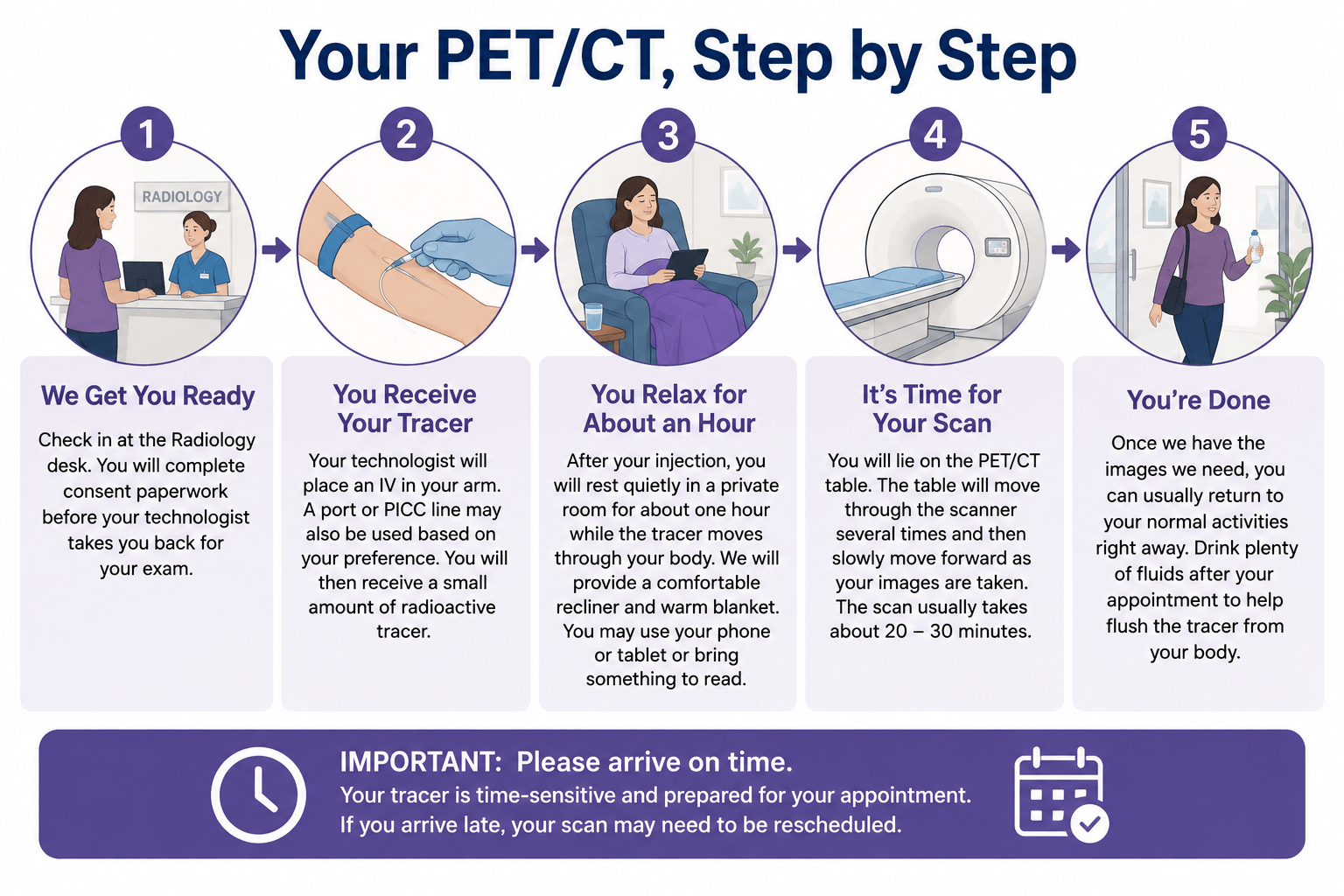
Vizamyl PET ScanWHAT HAPPENS DURING A PET/CT?
WHAT DOES THE PET/CT SCANNER LOOK LIKE?
See the Scanner Before Your Appointment
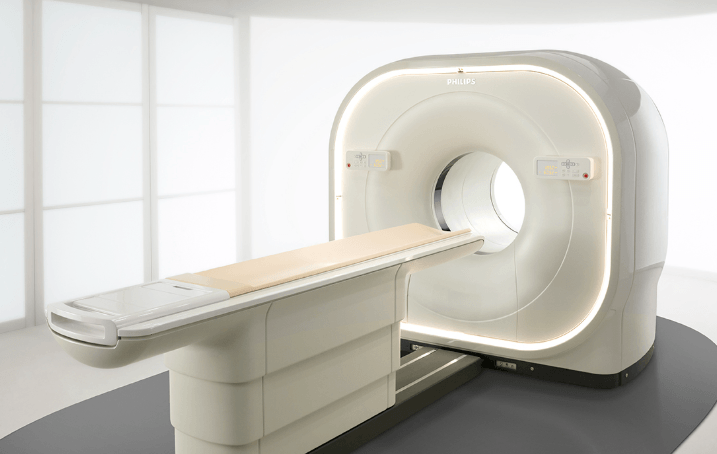
This is our PET/CT scanner. During the exam, the table will move in and out several times, then gradually advance at a slower pace every few minutes.
BEFORE YOUR PET/CT
Follow the Instructions for Your Specific Scan
Preparation is not the same for every PET/CT scan.
FDG PET has special food, fasting, exercise and diabetes instructions. Other PET scans have different preparation requirements.
Choose your exam above and follow the instructions on that page.
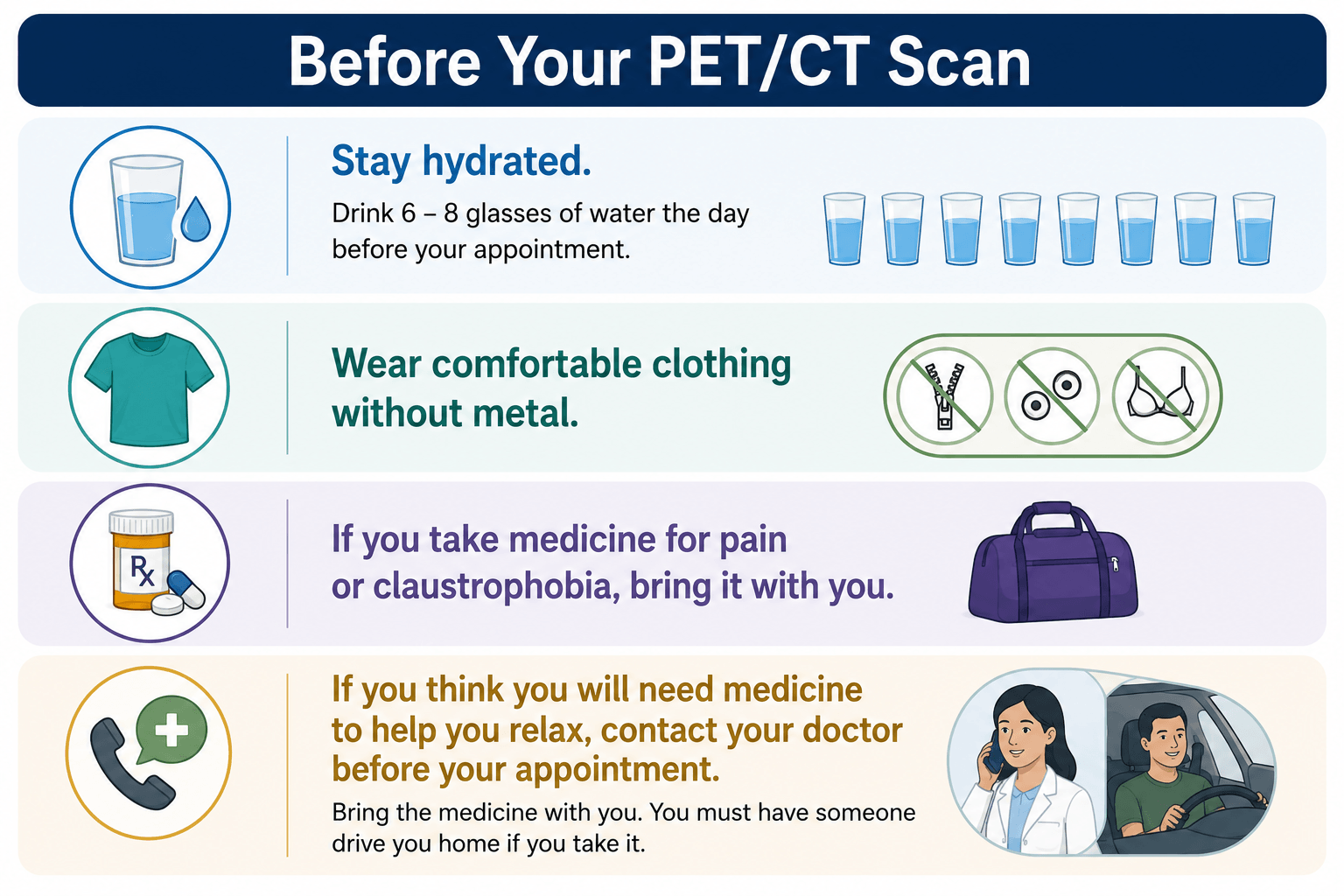
General Preparation
A NOTE ABOUT RADIATION
Small Amount. Important Information.
A PET/CT uses a small amount of radiation to create the images your doctor needs.
Medical imaging follows strict safety standards. Trained professionals carefully manage the amount of radiation used while making sure your doctor gets clear, useful images.
The information from your scan can help your doctor diagnose disease, plan treatment and monitor your health.
Learn More About Radiation and Medical Imaging
VISITORS AND SERVICE ANIMALS
Family members and guests cannot enter the PET/CT holding or scanning areas.
If a service animal will come with you, please bring someone who can stay with the animal while you have your exam.
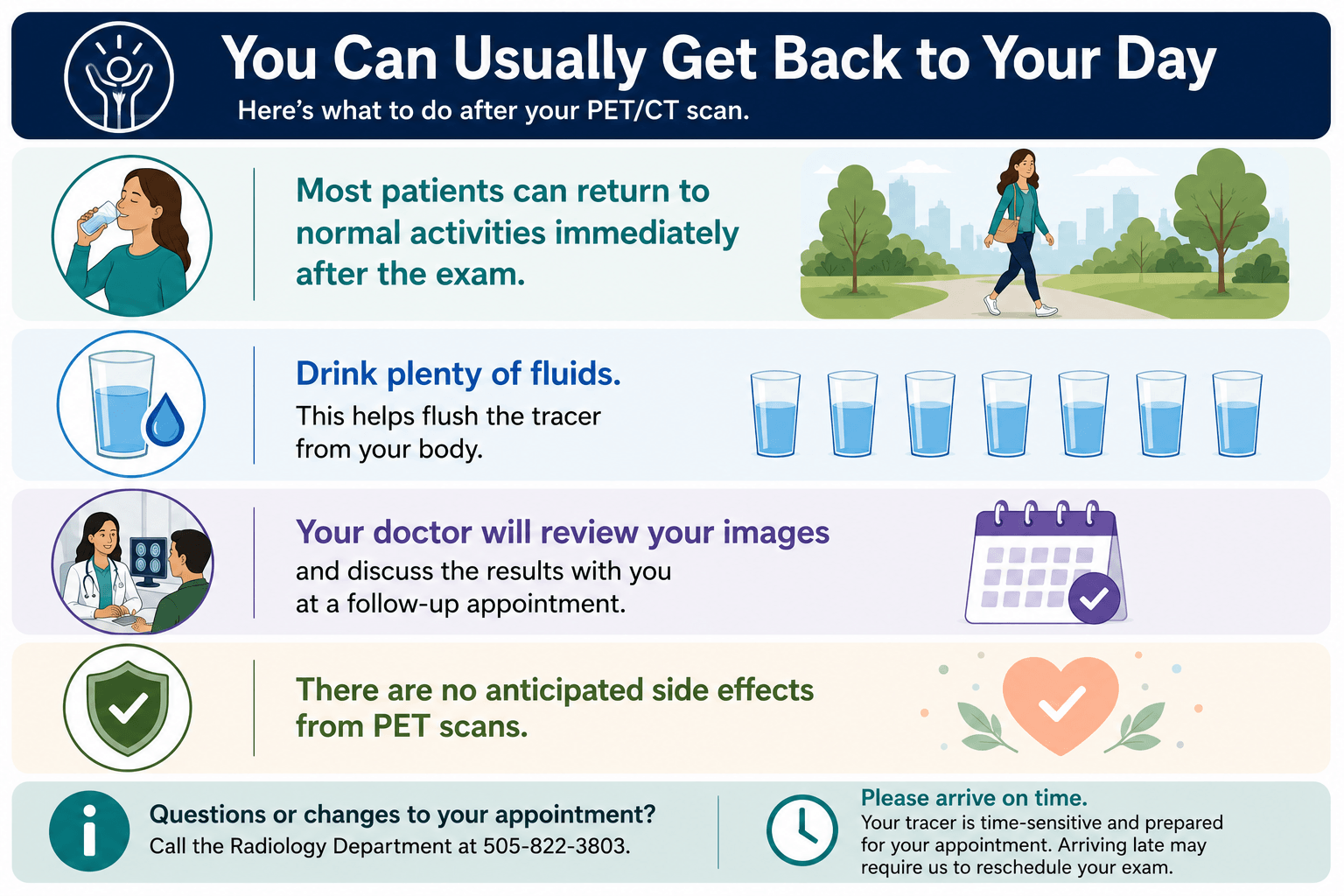
AFTER YOUR PET/CT
FREQUENTLY ASKED QUESTIONS
Does a PET/CT scan hurt?
The scan itself is painless. You will feel a brief needle stick when your IV is placed.
Why do I need an injection?
The tracer allows the PET scanner to see certain activity inside your body. Different tracers are used to look for different types of disease.
Is the tracer safe?
You receive a small amount of radioactive tracer for your exam. The New Mexico Cancer Center clinical instructions note that no side effects are anticipated from PET scans.
Will I feel the tracer?
The clinical instructions do not identify expected sensations or side effects from the PET tracers.
Why do I have to wait an hour after the injection?
The tracer needs time to travel through your body before your images are taken. You will rest quietly in a comfortable room during this time.
Can I use my phone while I wait?
Yes. You may bring your phone, tablet or something to read while you rest.
How long am I actually inside the scanner?
The imaging portion usually takes about 20 – 30 minutes.
Can I eat before my PET scan?
It depends on which PET exam you are having. Some PET scans have no fasting requirements. FDG PET has specific diet and fasting requirements. Follow the preparation instructions for your specific exam.
Can someone stay with me?
Family members and guests cannot enter the holding or scanning areas.
Can I drive home afterward?
Yes, unless you take medicine to help you relax. If you take relaxation medication, you must have a driver.
What happens to the tracer afterward?
Drink plenty of fluids after your exam to help flush the tracer from your body.
When will I get my results?
Your doctor will review your images and discuss the results with you at a follow-up appointment.
IMPORTANT SAFETY INFORMATION
FDG, Cerianna, Ga68 Dotatate and Vizamyl PET should not be performed on pregnant patients.
If you are breast feeding; previously pumped and stored breast milk or formula should be substituted for breast feedings for 48 hours after the scan.
QUESTIONS ABOUT YOUR PET/CT?
We're Here for You
If you have questions about your PET/CT or need to change your appointment, call the New Mexico Cancer Center Radiology Department at 505-822-3803.
If you need to cancel, please contact us by 5 p.m. the day before your appointment to avoid a fee.