
Lutathera Therapy
Targeted Treatment for Certain Neuroendocrine Tumors
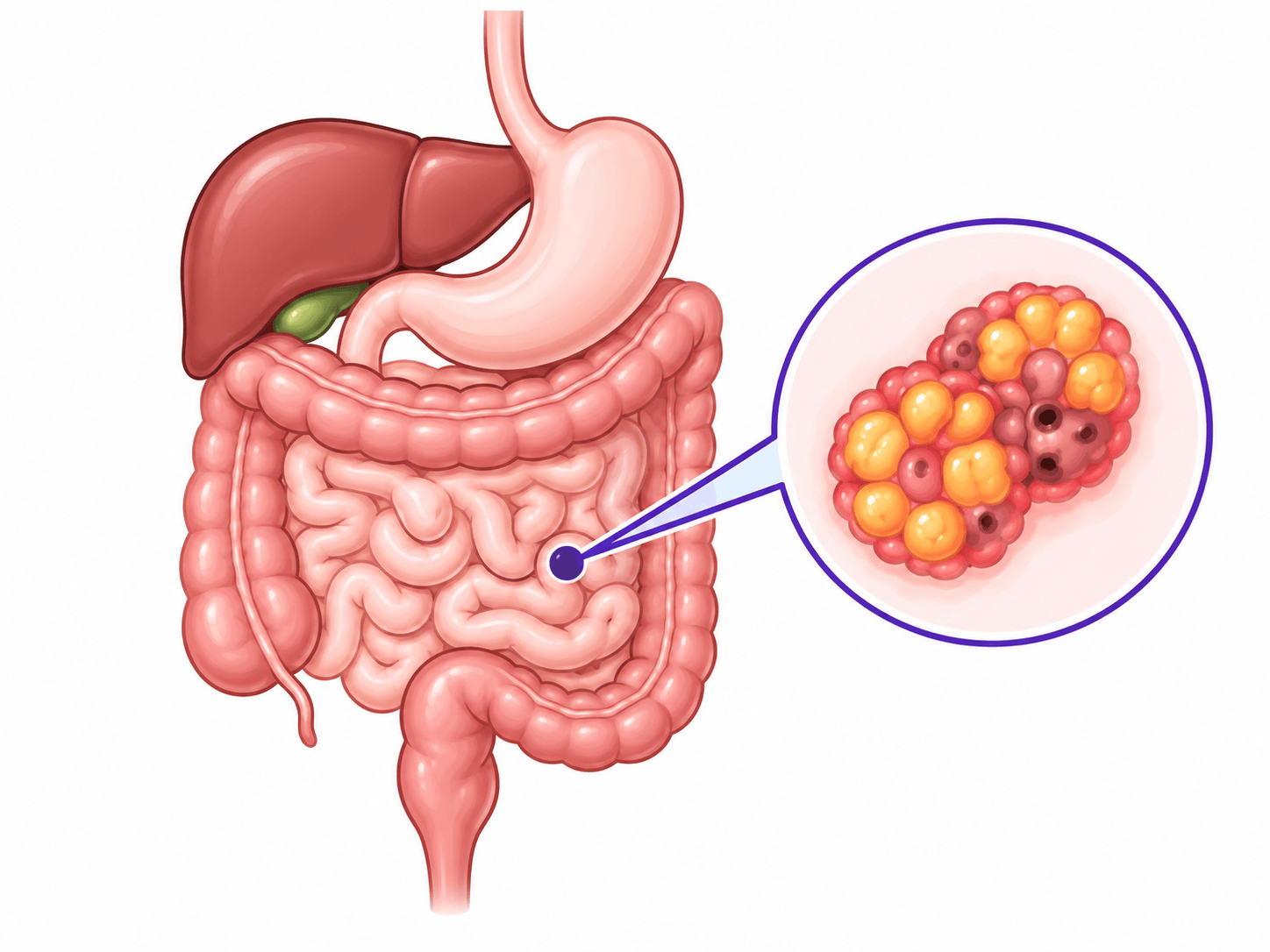
Lutathera is used to treat certain neuroendocrine tumors. The medicine looks for specific receptors on the tumor cells. Once it finds them, it attaches to the cells and delivers radiation directly to them. The radiation can damage or destroy cancer cells and help slow tumor growth.
| How is it given? | Through an IV |
|---|---|
| Treatment time | Lutathera infusion: about 30 minutes |
| Total visit | About 6 – 8 hours |
| How often? | Usually every 8 weeks |
| Typical course | Four treatments |
Why Does My Appointment Take So Long?
The Lutathera itself takes about 30 minutes.
You will also receive an amino acid solution to help protect your kidneys. That takes about 4 hours.
Plan to spend approximately 6 – 8 hours at the clinic. Bring something to help pass the time. A phone, tablet or book can make the day more comfortable. You may also bring a snack.
After Lutathera
Your care team will give you written instructions specific to your treatment. Follow those instructions for the duration of each precaution and call if anything is unclear.
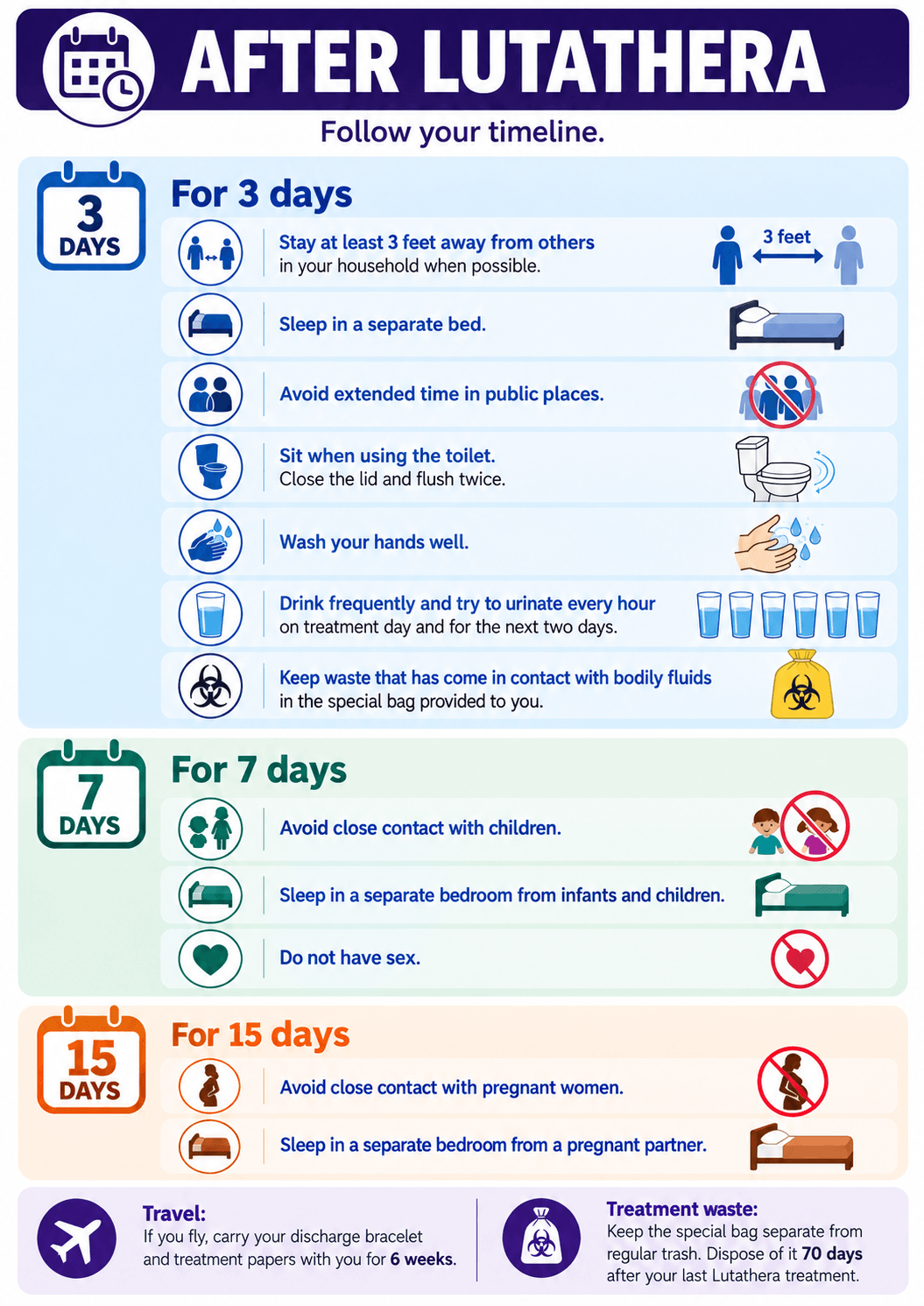
For 3 Days
- Limit close contact with other people in your household. Stay at least 3 feet away when possible.
- Sleep separately as instructed by your care team.
- Avoid extended time in public places.
- Sit when using the toilet. Close the lid and flush twice.
- Wash your hands well.
- Drink fluids and urinate frequently as instructed by your care team.
- Keep waste that has come into contact with body fluids in the specified treatment-waste bag.
For 7 Days
- Avoid close contact with children.
- Sleep in a separate bedroom from infants and children.
- Do not have sex.
For 15 Days
- Avoid close contact with pregnant women.
- Sleep in a separate bedroom from a pregnant partner.
Sex, Birth Control and Fertility
- Do not have sex for 7 days after treatment.
- Females who can become pregnant should use effective birth control during treatment and for 7 months after the last dose.
- Males with partners who can become pregnant should use effective birth control during treatment and for 4 months after the last dose.
- Discuss pregnancy prevention and fertility questions with your care team.
If You Need Help With Personal Care
- If a caregiver helps you in the bathroom, the caregiver should wear disposable gloves for 3 days after treatment.
- Catheters, colostomy bags, bedpans or other equipment that may contact body fluids should be emptied into the toilet immediately and then cleaned.
- Anyone helping clean urine or stool should wear plastic gloves. Put used gloves in the specified treatment-waste bag.
Bathroom Spills
For the first 3 days, if urine splashes on or around the toilet, clean the area carefully with soapy water and flush the tissue down the toilet.
Emergency Care and Work
- Carry your discharge bracelet with you for the first 3 days after treatment.
- If you need emergency medical care during the first week after treatment, tell the medical team the type, date and dose of your radioactive treatment.
- Do not return to work for at least 3 days. Continue the same restroom precautions when using a public restroom.
Travel and Treatment Waste
- Carry your discharge bracelet and treatment papers when you travel. Your treatment guide recommends keeping them with you for 6 weeks.
- Keep the treatment-waste bag separate from regular trash and away from children and animals. Follow the clinic's written instructions for storage and disposal.
What to Watch For
- Nausea, vomiting or tiredness.
- Temporary decreases in blood counts, which may increase the chance of infection, bruising or bleeding.
- Pain or swelling at the injection site.
Tell your healthcare provider promptly about new, worsening or unusual symptoms or side effects.
Questions About Your Treatment?
Have a question about your treatment, your appointment or your instructions at home? Call the New Mexico Cancer Center Radiation Oncology Department.