
I-131 Thyroid Therapy
Radioactive Iodine Treatment for Thyroid Conditions
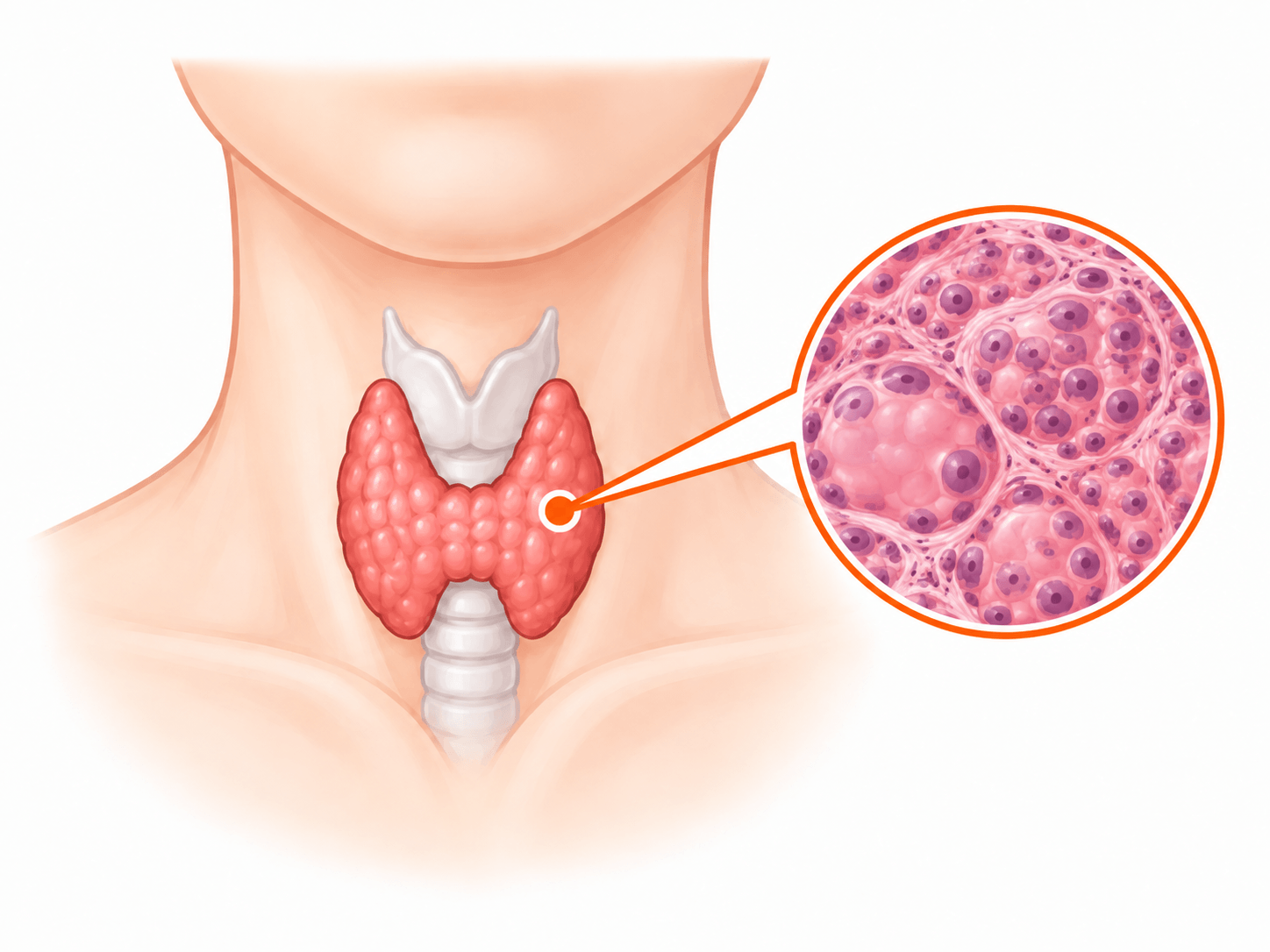
I-131 is a special type of radioactive iodine. Your thyroid naturally absorbs iodine. When you take I-131, your thyroid absorbs it just as it would regular iodine. The treatment then delivers radiation directly to overactive or abnormal thyroid cells while limiting exposure to the rest of your body.
Due to state regulations, patients receiving any theranostics treatment must bring two forms of ID to every appointment.
| How do I take it? | By mouth as a capsule or liquid |
|---|---|
| How long does it take? | The treatment itself takes only a few minutes. Total time in the clinic is about 30 to 60 minutes. |
| How often? | Often one treatment |
| Special diet beforehand? | Yes |
| Precautions afterward? | Yes |
Following a Low-Iodine Diet
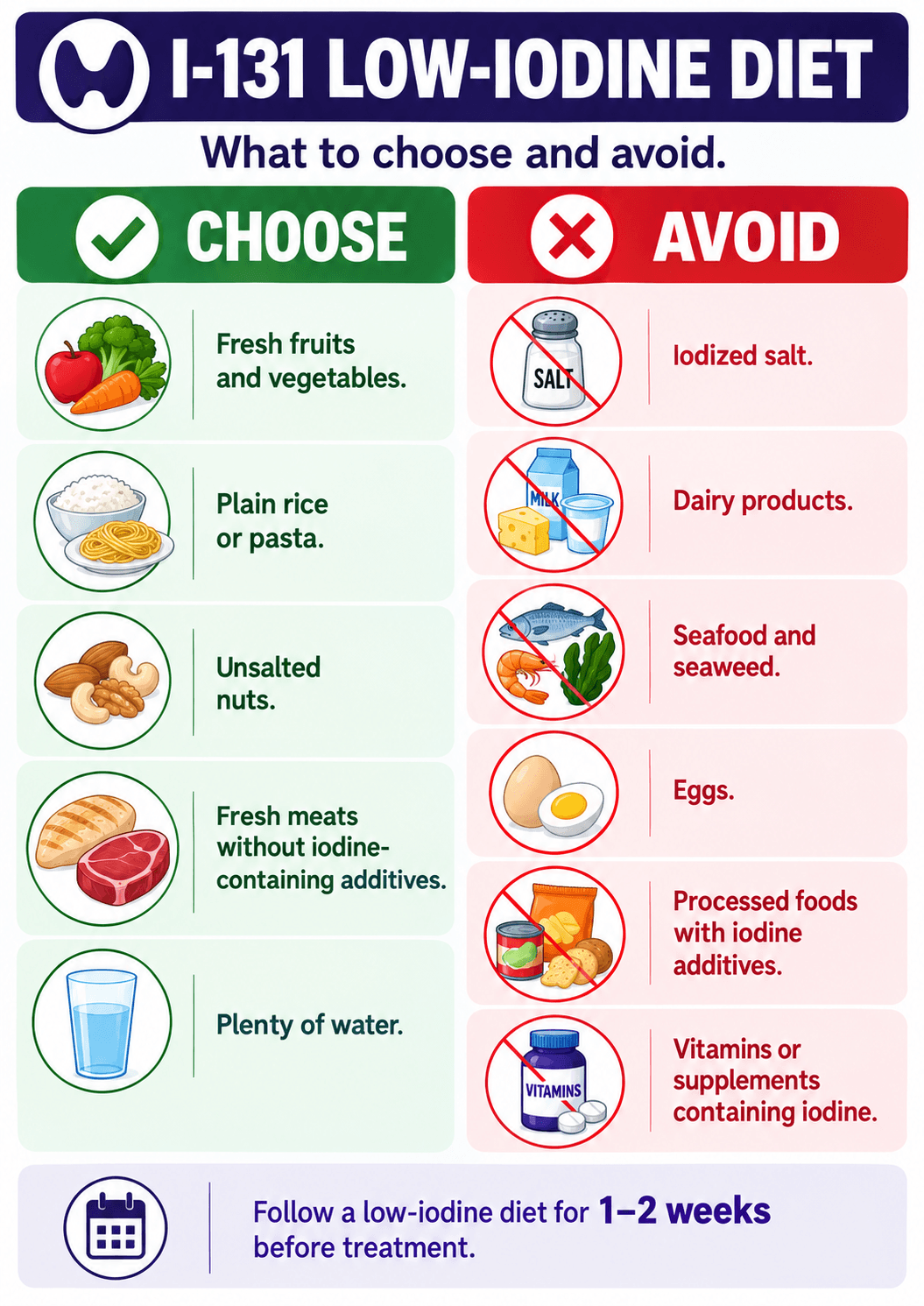
Follow the low-iodine diet prescribed by your care team. Your treatment guide recommends starting 1 to 2 weeks before treatment.
Foods to Choose
- Fresh fruits and vegetables
- Plain rice or pasta
- Unsalted nuts
- Fresh meats without iodine-containing additives
- Water
Foods to Avoid
- Iodized salt
- Dairy products
- Seafood and seaweed
- Eggs, as listed in your diet guide
- Processed foods with iodine additives
- Vitamins or supplements containing iodine
Check your appointment instructions for your exact diet dates and medication instructions. Ask your care team before changing any prescribed medicine or supplement.
After I-131 Thyroid Therapy
Your care team will give you written instructions specific to your treatment. Follow those instructions for the duration of each precaution and call if anything is unclear.
At Home After Treatment
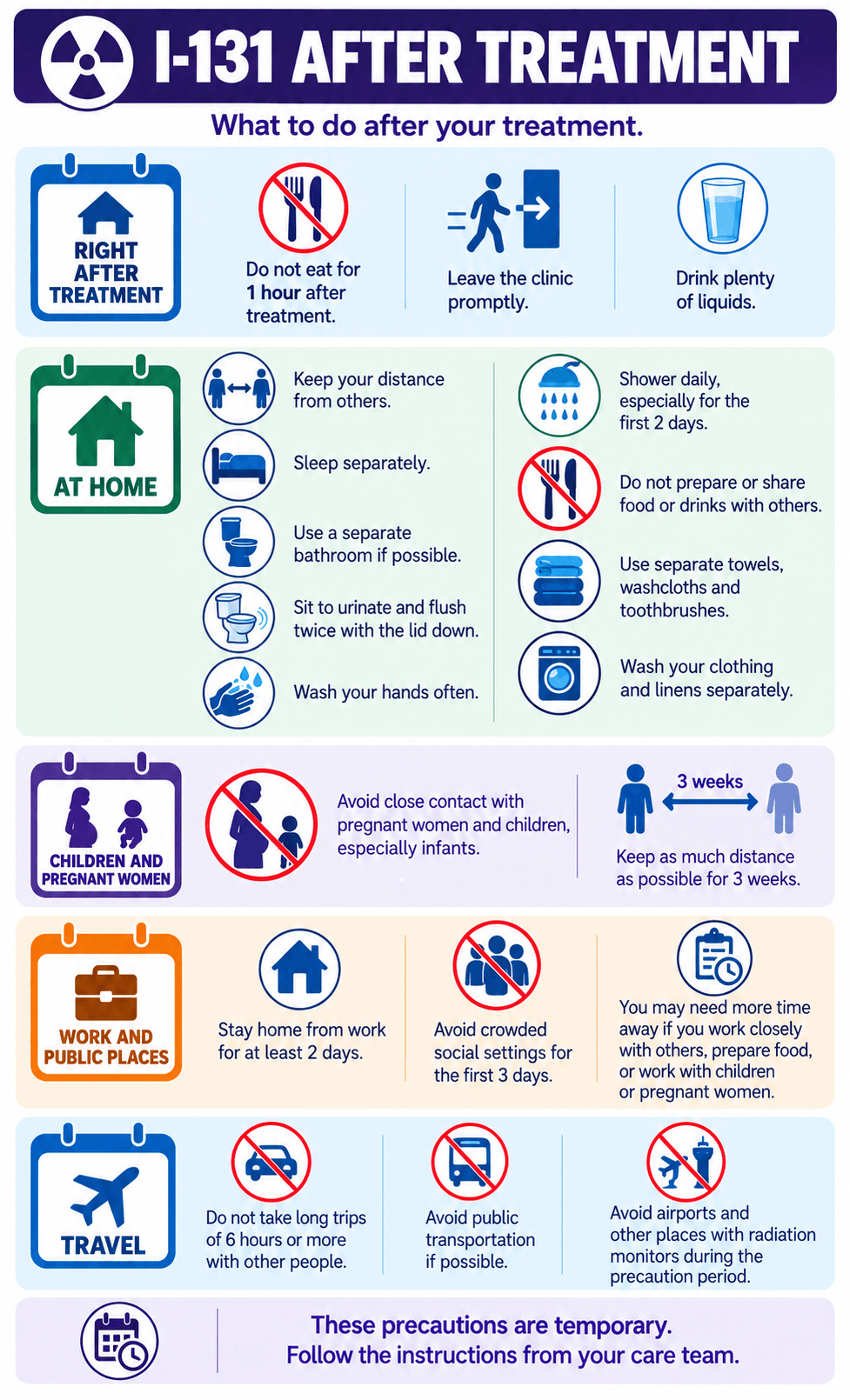
- Follow your care team's instructions about eating, drinking and leaving the clinic after your dose.
- Keep your distance from others, sleep separately and use a separate bathroom if possible.
- Wash your hands after each toilet use. Follow the clinic's bathroom and household cleanup instructions.
- Shower daily, especially during the first 2 days, and rinse the shower or tub afterward.
- Avoid close contact with pregnant women and children, especially infants, for the period prescribed by your care team.
If You Vomit
If you vomit within 4 hours after treatment, try to vomit into a trashcan and immediately call the Radiation Oncology Department at 505-842-8171.
Distance and Sleeping
- Do not remain within 3 feet of another person for more than 6 hours in any one day.
- Sleep in a separate bed and, if possible, in a separate bedroom.
- Have sole use of a bathroom if possible.
Bathroom and Household Cleanup
- If urine spills or splashes on the toilet seat or floor, clean the area carefully with soapy water. Wipe it with paper towels or tissue and flush them.
- Wash your hands with soap and water after each toilet use.
- Shower daily, especially during the first 2 days, and rinse the shower or tub well afterward.
- If possible, wash your own dishes well and reuse them. Your treatment instructions advise against disposable dishes because they may create landfill problems.
- Avoid kissing and sexual intercourse or other intimate contact.
- Starting on the second day, your treatment instructions recommend occasionally keeping sour candy, such as lemon drops, in your mouth to help protect your salivary glands.
Babies, Children and Pregnant Women
- Avoid contact with pregnant women and children, especially infants younger than 6 months. Minimize contact and maximize distance for 3 weeks.
- During the first week, keep close contact with pregnant women to no more than a few minutes per day.
- If you have a baby, it is best for someone else to provide care when possible. Do not keep the baby close to you, such as sleeping with the baby or holding the baby on your lap, for more than a very short time.
- Do not kiss an infant or child during the precaution period.
Breastfeeding
Tell your care team before treatment if you are breastfeeding or pumping. You must stop breastfeeding before I-131 treatment. Do not restart breastfeeding your current child after treatment. Breastfeeding may be possible with a future child. Ask your care team how far in advance you must stop breastfeeding.
Social Events and Work
- Avoid cinemas and other social events involving close contact with others during the first 3 days.
- After day 3 and for several weeks, avoid sitting close to others for more than a few hours.
- Do not return to work for at least 2 days. If your job involves close contact with other people, 3 days may be sufficient. If you prepare food for others or work with children or pregnant women, you may need to remain off work for several weeks. Ask your physician for the appropriate timing.
Travel
- If you must travel with others, sit at least 3 feet away from them when possible.
- If you eat at a restaurant, choose one that is not crowded.
- Ask your care team about travel restrictions and radiation monitors. Carry documentation of your treatment when traveling.
Emergency Care
If you are involved in an auto accident or another medical emergency, tell the medical team the date, type and amount of radionuclide therapy you received.
Pregnancy
- If you think you were pregnant and did not know it when you received radioiodine, tell your physician immediately.
- Discuss with your physician how long to wait before becoming pregnant after treatment. Your treatment instructions recommend waiting 6 to 12 months; confirm your timing with your physician.
What to Watch For
- Possible early effects include nausea, occasional vomiting, diarrhea, increased fatigue, pain in the salivary glands, decreased taste, dry mouth, sore throat, hoarseness and a temporary decrease in white blood cells that could increase the risk of infection.
- Possible late effects include permanently lower blood counts, salivary gland stones and a very rare possibility of a second malignancy.
- Thyrogen injections may cause nausea, headaches, fatigue and dizziness.
Tell your healthcare provider promptly about new, worsening or unusual symptoms or side effects.
Questions About Your Treatment?
Have a question about your treatment, your appointment or your instructions at home? Call the New Mexico Cancer Center Radiation Oncology Department.