
Pluvicto Therapy
Targeted Treatment for Certain Prostate Cancers
Pluvicto is used to treat certain prostate cancers that have a protein called PSMA. The medicine finds PSMA on prostate cancer cells and attaches to them. It then delivers radiation directly to those cells to help destroy them and slow the disease.
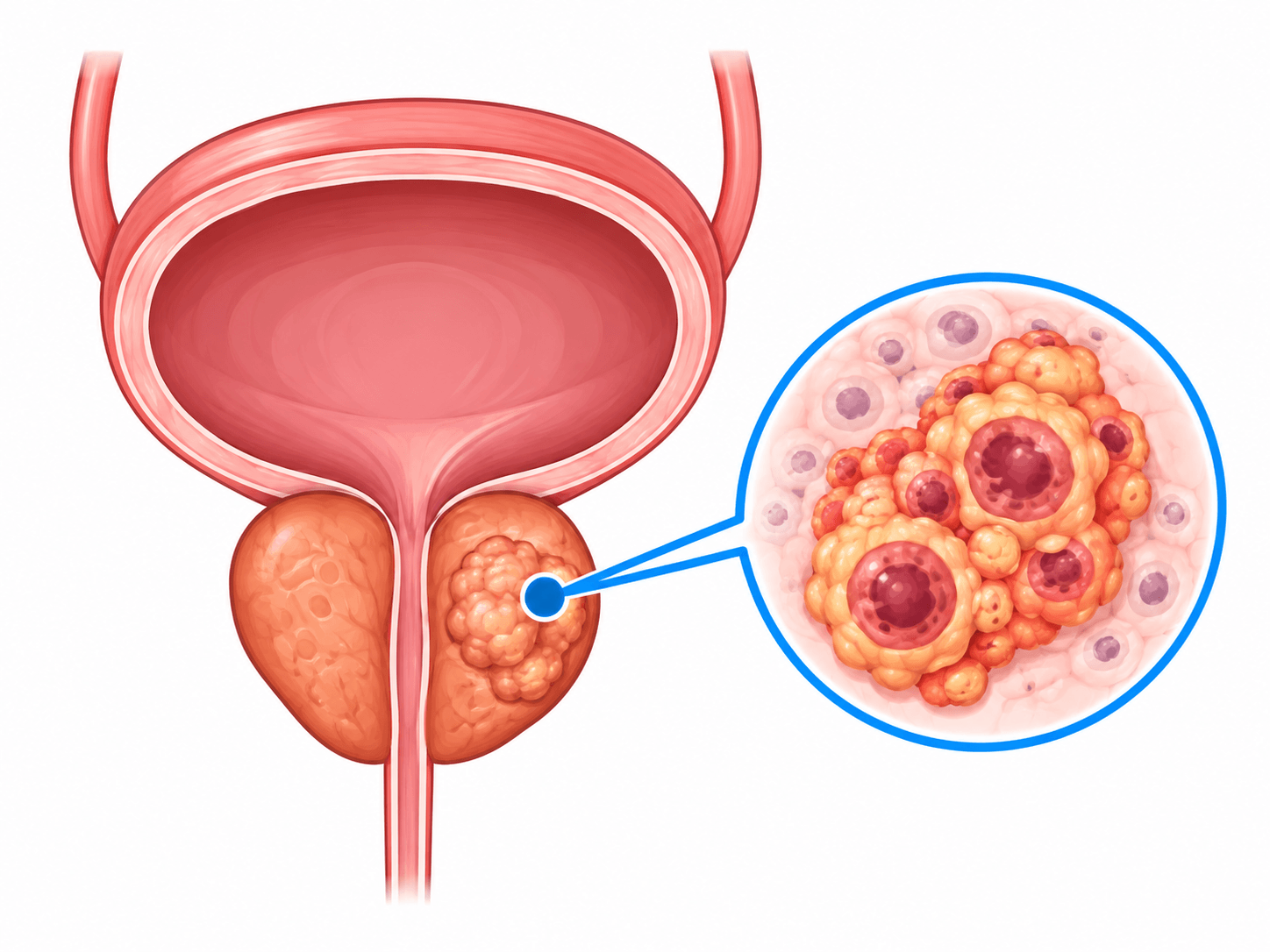
| What does it treat? | Certain prostate cancers |
|---|---|
| How is it given? | Through an IV |
| Infusion time | 5 minutes |
| Total visit time | About 30 to 60 minutes |
| How often? | Usually every 6 weeks |
| Will I need precautions afterward? | Yes |
Your Treatment Plan
Pluvicto is typically given every 6 weeks. Your doctor will determine the total number of treatments based on your response and how well you tolerate the therapy.
After Pluvicto
Your care team will give you written instructions specific to your treatment. Follow those instructions for the duration of each precaution and call if anything is unclear.
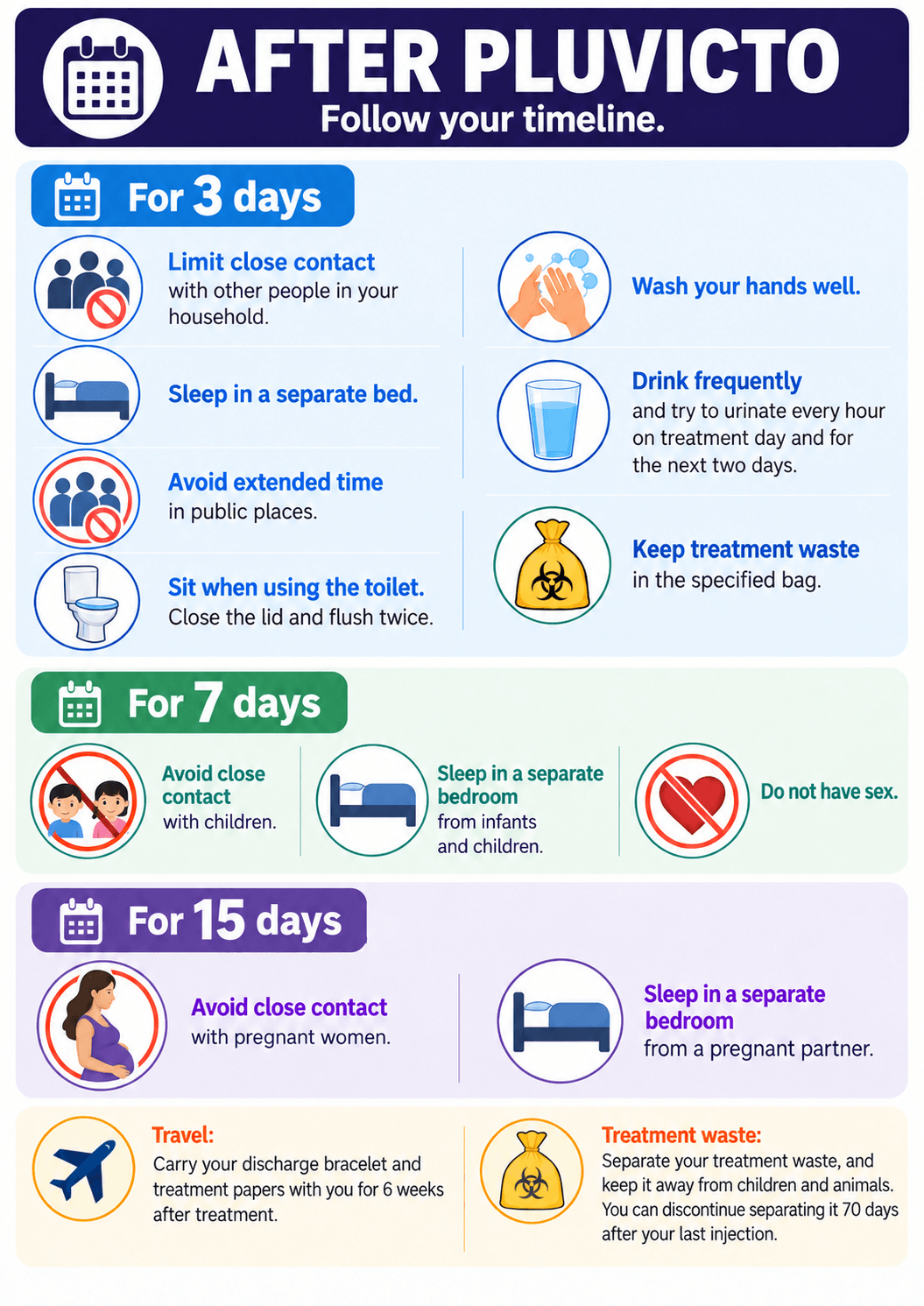
For 3 Days
- Limit close contact with other people in your household.
- Sleep separately as instructed by your care team.
- Avoid extended time in public places.
- Sit when using the toilet. Close the lid and flush twice.
- Wash your hands well.
- Drink fluids and urinate frequently as instructed by your care team.
- Keep waste that has come into contact with body fluids in the specified treatment-waste bag.
For 7 Days
- Avoid close contact with children.
- Sleep in a separate bedroom from infants and children.
- Do not have sex.
For 15 Days
- Avoid close contact with pregnant women.
- Sleep in a separate bedroom from a pregnant partner.
Sex, Birth Control and Fertility
- Do not have sex for 7 days after treatment.
- Use effective birth control during treatment and for 14 weeks after your last Pluvicto injection. Ask your care team which method to use.
If You Need Help With Personal Care
- If a caregiver helps you in the bathroom, the caregiver should wear disposable gloves for 3 days after treatment.
- Catheters, colostomy bags, bedpans or other equipment that may contact body fluids should be emptied into the toilet immediately and then cleaned.
- Anyone helping clean urine or stool should wear plastic gloves. Put used gloves in the specified treatment-waste bag.
Bathroom Spills
For the first 3 days, if urine splashes on or around the toilet, clean the area carefully with soapy water and flush the tissue down the toilet.
Emergency Care and Work
- Carry your discharge bracelet with you for the first 3 days after treatment.
- If you need emergency medical care during the first week after treatment, tell the medical team the type, date and dose of your radioactive treatment.
- Do not return to work for at least 3 days. Continue the same restroom precautions when using a public restroom.
Travel and Treatment Waste
- Carry your discharge bracelet and treatment papers when you travel. Your treatment guide recommends keeping them with you for 6 weeks.
- Keep the treatment-waste bag separate from regular trash and away from children and animals. Follow the clinic's written instructions for storage and disposal.
What to Watch For
- Fatigue, nausea or vomiting.
- Changes in blood counts, including decreases in red blood cells, white blood cells or platelets. These changes can increase the risk of anemia, infection or bleeding.
Tell your healthcare provider promptly about new, worsening or unusual symptoms or side effects.
Questions About Your Treatment?
Have a question about your treatment, your appointment or your instructions at home? Call the New Mexico Cancer Center Radiation Oncology Department.