
Understanding Breast Cancer
Breast Health Resources > Understanding Breast Cancer
You Are Not Alone.
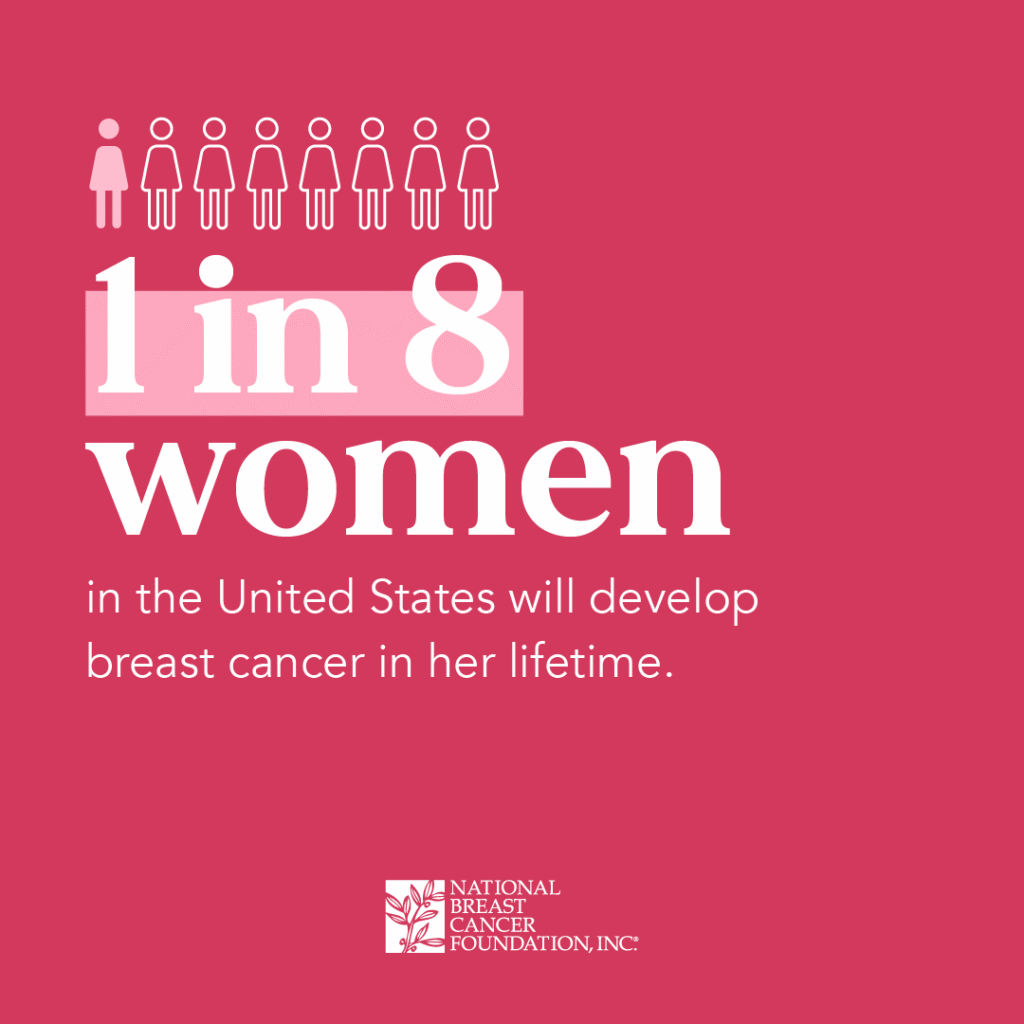
Hearing the words “breast cancer” can be frightening, even when it’s found early. Please know this: breast cancer is common, and it is not your fault. Early detection gives us more options and excellent outcomes. This guide will walk you through what to expect, explain your care options, and remind you that you are supported by an experienced team committed to treating you with compassion, clarity, and respect.
Types of Breast Cancer
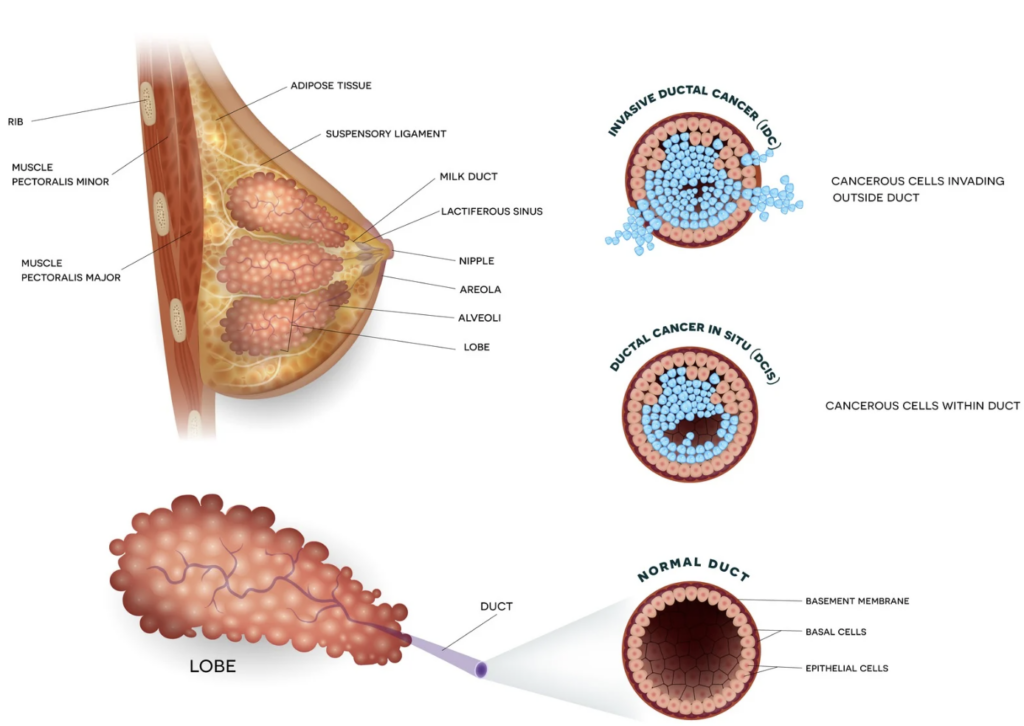
There are two main types of breast cancer, 85% are ductal and 15% are lobular.
Ductal Carcinoma
- DCIS (Ductal Carcinoma In Situ - Stage 0): The abnormal cells have not spread outside the duct and cannot yet metastasize. It is usually found on a mammogram as microcalcifications.
- IDC (Invasive Ductal Carcinoma): The most common type of breast cancer, representing about 80% of cases. It can spread to lymph nodes or other body parts.
- Symptoms: Generally, DCIS causes no symptoms. IDC may present as a painless lump, nipple changes, red rashes, or thickening of the skin.
- Treatment:
- DCIS: Often treated with surgery and sometimes radiation.
- IDC: Treated with surgery, often followed by radiation, chemotherapy, or hormone therapy depending on the tumor's characteristics.
Lobular Carcinoma
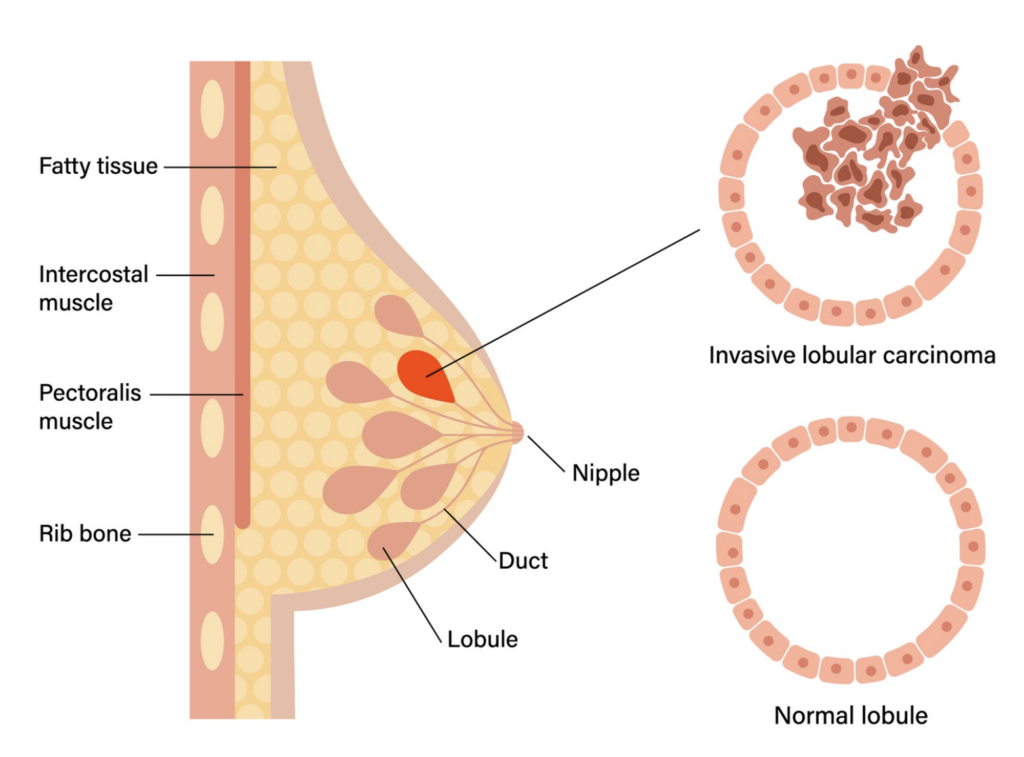
- Synonyms: Often referred to as Invasive Lobular Carcinoma (ILC) or Infiltrating Lobular Carcinoma.
- Symptoms: Instead of a hard, movable lump, symptoms often include a thickening or hardened area in the breast, a feeling of fullness, skin puckering/dimpling, or nipple inversion
- Characteristics: These cancers are usually hormone receptor-positive (ER+ or PR+), HER2-negative, and tend to be slower-growing.
- Detection Challenges: Because they do not always form a distinct tumor, they are often detected later than ductal cancers, sometimes as large, subtle areas of tissue change.
- Usage/Appearance: They can be multifocal (multiple areas in one breast) or bilateral (in both breasts).
- Treatment: Primary treatment involves surgery, often followed by hormone therapy (like tamoxifen or aromatase inhibitors), radiation, and sometimes chemotherapy.
Treatment Groups/Subtypes of Breast Cancer
Breast cancers use many ways to out smart the body, but we have targeted medicines for 3 of them. Breasts respond to estrogen and progesterone with monthly periods and during pregnancy. Some breast cancers take advantage of this system and make themselves EXTRA sensitive to female hormones. Other breast cancers make extra copies of a growth signal call HER2. We have targeted medicines to estrogen, progesterone and HER2.
STAGING
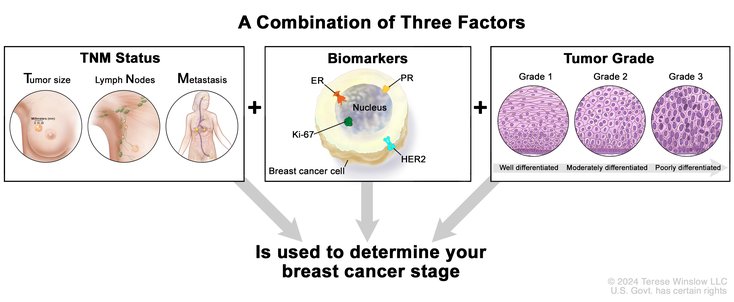
The stage of your cancer is based on the size of the tumor and if it has spread to other areas. It is also based on the type of tumor cells. There are five stages of breast cancer, including zero through four, written as 0, I, II, III, and IV. The higher the number, the more the cancer has spread. The cancer is staged when you are first diagnosed by imaging or surgical procedures to sample the tissue.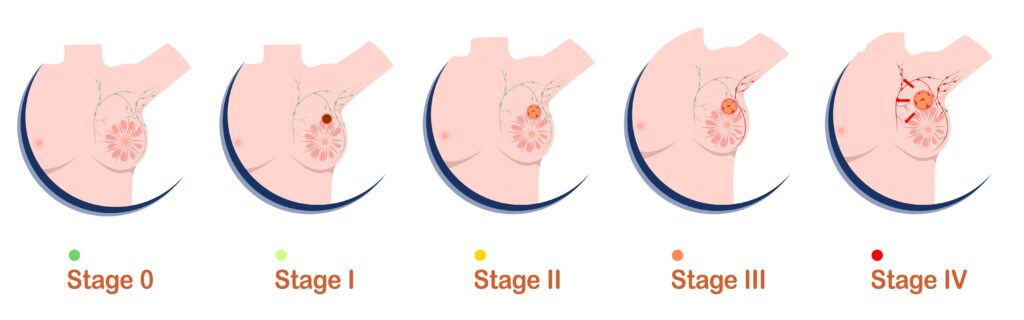
Each patient is unique, we will work with you to create a treatment plan designed just for you, so we can make sure you get the best possible care. Our Breast team will work with you every step of the way so that you understand the staging process, and why a treatment plan is your best option.